📁 Australia news
Politics Live: ‘Stop the Spin’ on Golf Grant; MP Safety Vow
E
Editorial Team
2026-10-27
👁 16 views
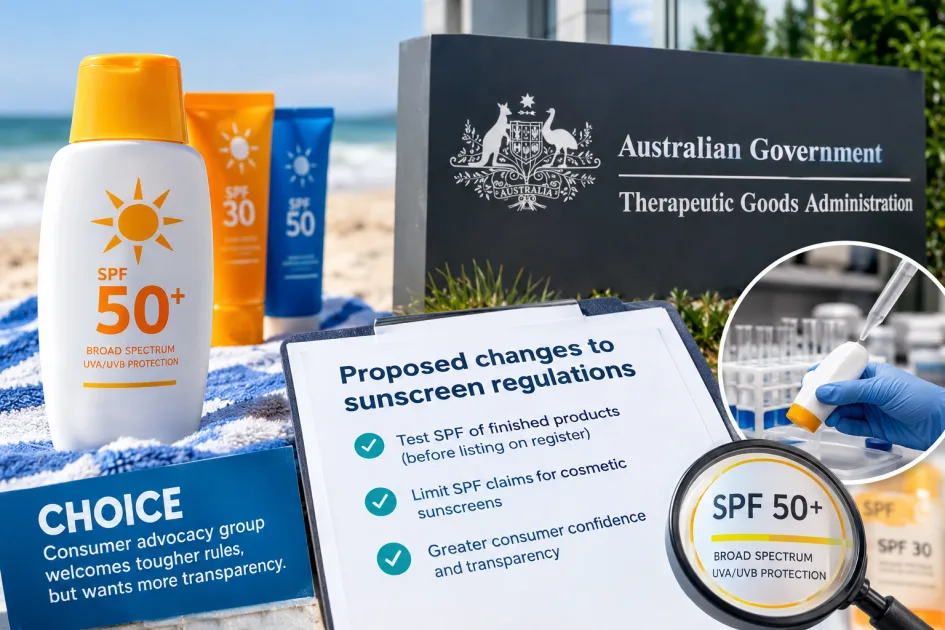
Australia’s medicines regulator has proposed tougher rules for sunscreen makers after tests found that many popular products did not provide the level of sun protection promised on their labels.
The Therapeutic Goods Administration (TGA) announced the proposed changes following a review aimed at rebuilding public trust and making sure sunscreen companies follow their legal responsibilities.
The review included a three-month public consultation earlier this year. According to the TGA, it received 120 responses.
Sunscreen makers could face stricter testing
Under the proposed rules, companies would have to test the sun protection factor (SPF) of their finished sunscreen products before adding them to Australia’s medicines register.
Currently, the new proposal focuses on making sure testing reflects the product that customers actually buy, rather than relying only on tests of its basic formula.
The TGA also plans to limit the SPF claims that cosmetic sunscreens can make. The aim is to help shoppers understand the difference between cosmetic products that offer some sun protection and sunscreens designed mainly to protect skin from the sun.
Tests raise concerns about sunscreen protection
The review followed testing by CHOICE, an Australian consumer advocacy organisation. Its investigation found that 16 of 20 sunscreen brands tested failed to deliver the level of protection advertised on their packaging.
The findings raised concerns about whether consumers could trust the SPF claims printed on sunscreen bottles.
SPF is a measure used to show how well sunscreen protects against the sun’s ultraviolet radiation that causes sunburn. People rely on these claims when choosing products to protect their skin.
Consumer group calls for greater transparency
CHOICE has welcomed the TGA’s proposed changes but says the plans do not go far enough.
Andy Kelly, the organisation’s consumer impact director, said stronger rules were a positive step. However, he criticised the lack of plans for regular checks of sunscreen test results.
Under the proposal, companies would provide their testing results confidentially to the TGA. The results would not automatically be made public.
CHOICE argues that consumers should be able to see the results so they can make informed decisions about which products to use.
The organisation also wants the TGA to check test results regularly and carry out its own testing to make sure sunscreen products meet their advertised SPF levels.
The proposed reforms are intended to improve confidence in sunscreen products and strengthen manufacturers’ responsibilities. However, questions remain about how openly the results will be shared and how closely the regulator will monitor products once the new rules are in place.